
Mass spectrometry can provide protein structural information to complement data from X-Ray crystallography or CRYO-EM.
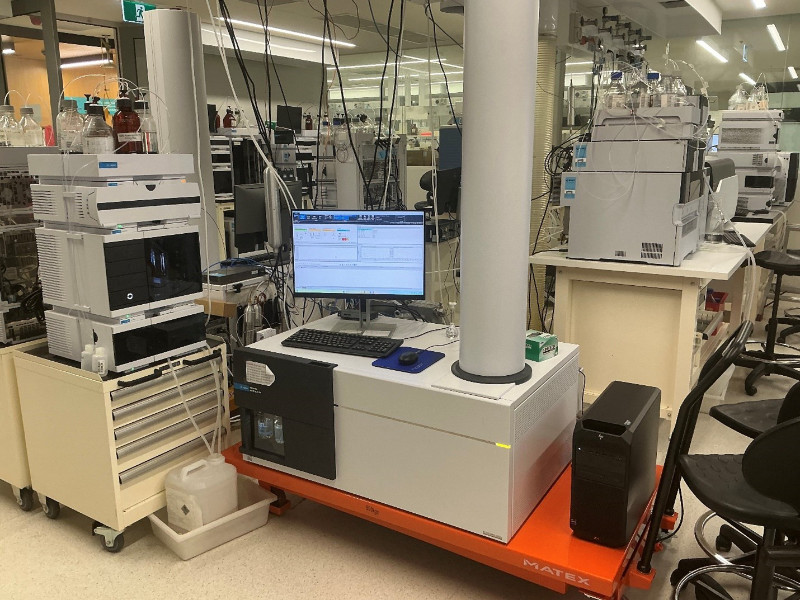
We have multiple instruments dedicated to the analysis of protein structure. The simplest is the Agilent 6545, which is dedicated to intact mass analysis of recombinant proteins. A fast and simple way to check if your recombinant protein is what you think it is.
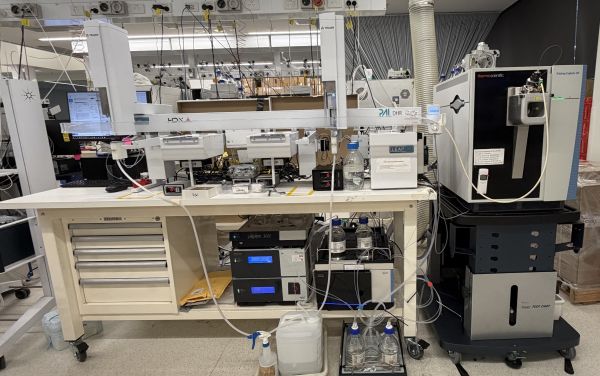
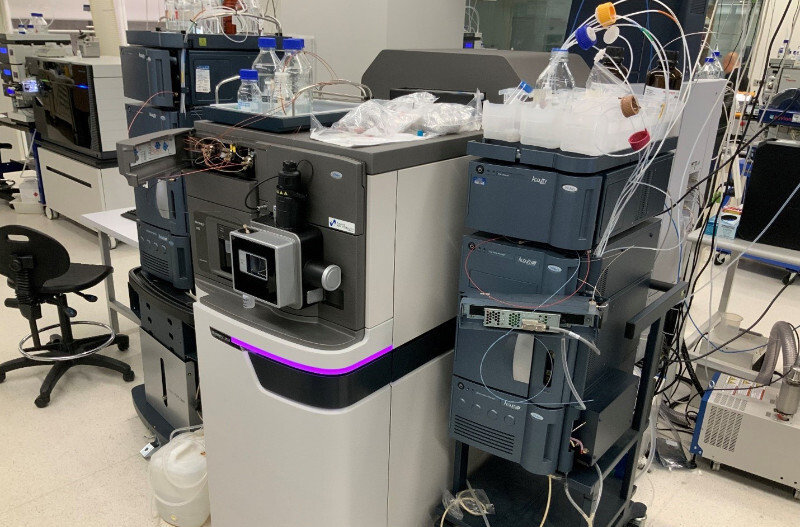
The Waters instruments and the Trajan HDX robot are the core of our Hydrogen-Deuterium eXchange platform (HDX) which can provide information that is not possible via CRYO-EM or X-Ray Crystallography. HDX is a complementary technique to the other protein structural techniques. As a solution method it can provide insights on both structure and dynamics of proteins and protein interactions. In particular, HDX can provide information on unstructured regions of proteins that are invisible to crystallography and cryo-EM. While similar information can be obtained from NMR, HDX requires much less protein (µg vs mg) and can be used on large proteins and protein complexes. For these reasons HDX is for many structural biology projects a missing link in the ability to fully characterise proteins and their interactions.
- Waters Synapt XS IMS QTOF
- Thermo OrbiTrap Exploris 480
- Trajan HDX system (robotic HDX platform)
Make a booking via iLab
The iLab booking system supports effective and efficient research platform management. Equipment training and booking are generally open to all academic users from the University of Melbourne or other universities and research institutes.