4 Minute read
Life as a graduate researcher: Tairu Chen
Tairu Chen’s journey to a PhD at the University of Melbourne started in China, when he emailed a professor after reading an inspiring research paper. Now, with support from a China Scholarship Council - University of Melbourne PhD scholarship, he’s researching geothermal energy to help create a more sustainable system for the heating and cooling demands of commercial and residential buildings.
Taking a hot shower in winter is one example of the heating demands in our houses. But before that can happen, the water must first be warmed by gas or electricity. What if we could use a natural resource – the heat stored in ground – to do some of the warming for us? Tairu Chen is researching heat transfer between soil particles in his PhD to support geothermal systems that utilise this heat.
“My research seeks to understand what factors can increase the heat-transfer efficiency between the soil particles,” he explains. “This will hopefully help engineer a way to increase the efficiency of the whole geothermal system.”
Different types of soil have different particle sizes and shapes, which affect how much heat transfers between them. Thermal conductivity indicates a substance’s ability to transfer heat. Generally, bigger and rounder particles generate greater thermal conductivity.
“Higher thermal conductivity generally creates higher overall system efficiency,” Tairu says. “That’s why my research is important – to further our understanding of the fundamental factors influencing thermal conductivity.”
Collaborating with other PhD candidates for system-wide solutions
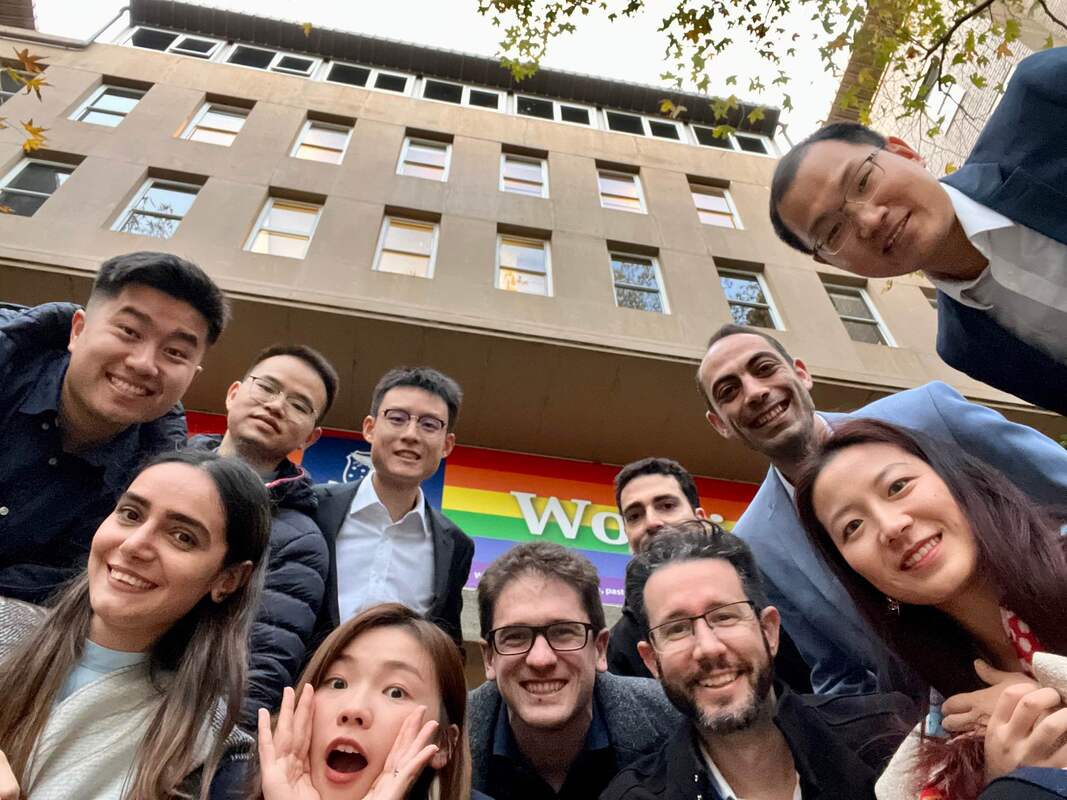
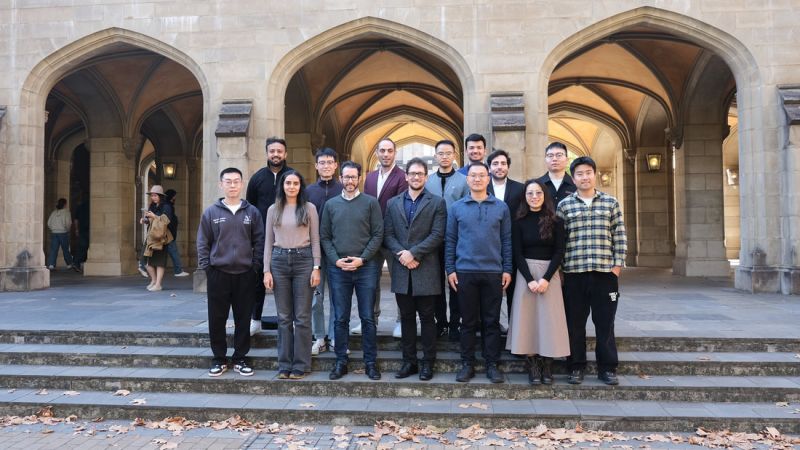
While Tairu’s research focus is literally microscopic – analysing soil particles and heat transfer between them– he is part of a broader research group that is investigating geothermal energy systems as a whole. That means he presents the data he uncovers to other PhD candidates, who then input the information into system-scale simulations.
The aim is to analyse the effects of his findings on geothermal energy systems and build a broader functioning system to achieve the goal of utilising geothermal energy more efficiently.
“We talk with each other all through the work, and have group meetings,” Tairu says.
The group is also an invaluable source of support outside of the laboratory. “We will rehearse before we present our findings nationally or internationally, or even here at the department level. We give comments on how to improve our presentations. That’s how we help each other.”
The researchers work in the cutting-edge Melbourne Connect building, alongside researchers from other disciplines and industry partners. The research group is even using the building itself as a kind of experiment outside their PhD work, collecting data on its energy systems in an attempt to improve its overall efficiency.
Support to relocate from China to Melbourne
When Tairu was living in China, he chanced upon an interesting paper on geothermal energy written by Professor Guillermo Narsilio Ferrero in the University of Melbourne’s Department of Infrastructure Engineering.
He emailed Professor Narsilio to share his enthusiasm for the article and he wrote back, encouraging Tairu to consider pursuing a PhD.
Later on, the University organised a recruitment fair in China in my home city, and I met an academic there who convinced me to apply. I thought, why not? Melbourne is a famous university, and a great city.Tairu Chen
Tairu was also fortunate enough to receive a China Scholarship Council - University of Melbourne PhD scholarship. The scholarship is for students who are citizens of the People’s Republic of China and enrolling in a PhD degree. It fully covers tuition fees, offers a living allowance and student health cover, and funds a return airfare between China and Melbourne.
He says the scholarship has been invaluable in supporting his living costs in Melbourne and has enabled him to pursue international opportunities while studying.
Building an international network
Presenting his research findings internationally has been a highlight of Tairu’s PhD experience.
“Last year I attended an international conference in Edinburgh and communicated my research with experts from all around the world.”
He has also enjoyed learning the programming language Python & C to help answer specific research questions in his lab.
Learning that new skill to help answer a question that nobody else has answered … it gave me a sense of fulfillment. That feeling is why I pursued a PhD. Tairu Chen
Thanks to the support from his supervisor Professor Guillermo Narsilio Ferrero, Tairu also seized the opportunity to contribute research for an industry partner outside of his PhD. The company wanted to understand the thermal properties of the seeds it transports, so they could control the temperature of the transportation. To help answer the question, Tairu tested thermal properties of seeds in a University lab and sent the data to the industry partner.
At the end of his PhD, Tairu feels he has an advanced understanding of engineering principles and is “no longer afraid of anything that is complex”.
“Being able to solve complex research questions during my PhD has given me the confidence to learn new skills and new tools fast.”
He is joining the renewable energy industry as an engineer focusing on renewable energy storage at Contemporary Amperex Technology.
First published on 10 December 2024.
Share this article
Keep reading
-
Why research with us
Explore the benefits of undertaking your graduate research at the University of Melbourne.
-
Your research options
Explore your options as a graduate researcher at the University of Melbourne.
-
Your study experience
Discover what it's like to be a graduate researcher. Find out about University life, support services, and opportunities for skills development.
-
How to apply
Find out how to apply for graduate research at the University of Melbourne.