The University of Melbourne is a leading institution dedicated to cultivating research and teaching that benefits society. Using animals in research and teaching is often essential to advances in knowledge that improve the health and wellbeing of both humans and animals, and that protect the environment.
Many of our modern achievements in developing treatments and medication for serious diseases would not have been possible without the use of animals. While animals currently remain an important part of the work that we do, our researchers are consistently striving to replace animal studies with alternative methods wherever feasible, reduce the number of animals used wherever possible, and refine all procedures to minimise any potential discomfort.
The University recognises that animals are sentient beings with intrinsic value. We respect the lives and experiences of all animals used in research and teaching. We understand that the use of animals for scientific purposes is a privilege that needs to be backed by high standards of animal care and we adhere to strict ethics guidelines and regulatory requirements in all our animal research.
Our Culture of Care encourages shared responsibility across everyone involved in the care and use of animals. We employ in‑house specialists to advise on welfare, support researchers in meeting their obligations, and help foster an environment where animal wellbeing is central to all decision‑making.
Animal care and use at the University of Melbourne
Animal care and use at the University of Melbourne covers an extensive range of disciplines and research areas, including:
- Leading research groups committed to advancing research in domestic and wild animals’ health, disease and welfare while offering expert guidance and education, including the Animal Welfare Science Centre and One Health Research Group
- The Melbourne Biodiversity Institute is committed to tackling the biodiversity crisis and actively engages in conserving endangered Australian species
- The University’s Agriculture and Veterinary Science efforts support research, training and teaching including extensive research for animal wellbeing and health to improve understanding and outcomes and veterinary practices.
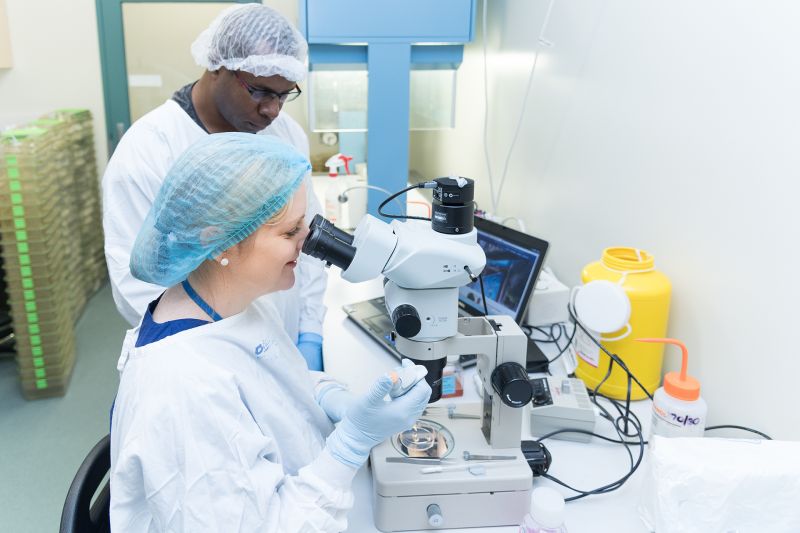
A large portion of the animal care and use at the University involves fundamental and applied research aimed at understanding and developing treatments for diseases that affect millions of people. This research is primarily conducted with mice, rats, and zebrafish, as they have genetic similarity to humans. We also have a lot of scientific knowledge about them, and their ability to model human diseases and development reliably. They are housed and cared for by the Melbourne Bioresources Platform (MBP). The MBP is a specialised support platform working collaboratively with researchers to uphold high standards of animal welfare throughout the lifecycle of each project.
Our agreement to openness
The University of Melbourne is proud to be one of the early signatories of the Openness Agreement on Animal Research and Teaching in Australia, developed by the Australian and New Zealand Council for the Care of Animals in Research and Teaching (ANZCCART).
We recognise that using animals in research raises important ethical questions. We commit to fostering a culture of openness and transparency by providing clear, accessible information so the community can understand why animals are used, how their welfare is protected, and how we are working to reduce our reliance on animals over time. We want to enhance public confidence and improve accountability to support high-quality research at the University and throughout Australia.
Culture of care
At the University of Melbourne, we have an institutional commitment to the humane care and use of animals and respect and support for the people who work with them, which in turn supports quality research and teaching. Our Animal Care and Use Policy sets out the principles and expectations that guide when and how we undertake teaching and research using animals at the University.
While many scientific questions can now be explored using nonanimal methods such as computer models, cell cultures or organoids, some aspects of health, disease and biology research still require the use of animals. We support the use of animals in research and teaching only when there are no practical alternatives and their use is ethically justified, meaning that the potential benefits of the research or teaching must outweigh any harms experienced by the animals.
Central to this ethics framework are the 3Rs, which are long-established principles that underpin all animal use at the University. Under the Australian Code for the Care and Use of Animals for Scientific Purposes, the 3Rs are defined as:
- Replacement: methods that permit a given purpose of an activity or project to be achieved without the use of animals
- Reduction: methods for obtaining comparable levels of information from the use of fewer animals in scientific procedures or for obtaining more information from the same number of animals
- Refinement: methods that alleviate or minimise potential pain and distress and enhance animal wellbeing.
3Rs Animal Welfare Excellence Award Program
Our Animal Welfare Excellence Award Program is a cornerstone of our Culture of Care, showcasing the University’s commitment to leading best practice in the humane, responsible use of animals. The program celebrates and amplifies the innovative, high‑impact contributions our researchers make to advance the 3Rs, developing cutting‑edge non‑animal replacement models, reducing animal use where possible, and refining practices to continually improve animal welfare.
Each year, we host a dedicated awards event to highlight the outstanding achievements of our research community, share their learnings, and support the spread of best practice across the University. This celebration not only recognises excellence but also inspires others to pursue novel, ethical and welfare‑focused approaches in their work.
The awards are made possible by the Sir William Brunton Memorial Fund, helping to recognise ongoing improvement in animal welfare and responsible research practice at the University.
Governance and oversight
We take our responsibility for animal welfare seriously. At the University of Melbourne, and across Australia, the use of animals in research and teaching operates within a strict regulatory framework designed to protect animal wellbeing and uphold the highest standards of scientific rigour and animal care.
Oversight occurs primarily through institutional Animal Ethics Committees (AECs), which are guided by the Australian Code for the Care and Use of Animals for Scientific Purposes ('the Code'), the Code of Practice for the Housing and Care of Laboratory Mice Rats Rabbits and Guinea Pigs (Victoria), and the Prevention of Cruelty to Animals Act 1986 (Victoria).
AECs evaluate every proposed project, considering both scientific merit and animal welfare impact, and approve only those that meet ethical and regulatory requirements.
Under the Code, an AEC must include four categories of members which are:
- Registered veterinarians
- Experienced researchers
- Animal welfare representatives
- Wider community (members of the community with no connection to research).
The AECs use the ethical and regulatory framework provided by the Code to assess all proposed research and its impact on animal welfare, only approving projects that meet these standards.
Using animals for research and teaching is a privilege, not a right. Our governance processes, regulatory requirements, and strong Culture of Care reflect this principle. All researchers must follow a structured approval pathway before beginning any activity involving animals, along with ongoing monitoring and reporting throughout the life of each project. Dedicated central teams work alongside researchers to provide expert guidance and continually improve animal welfare.
Frequently Asked Questions
-
Yes. Research carried out using animals has been instrumental in the development of many medicines and treatments that improve the health and welfare of animals. Research on wildlife provides direct and indirect benefits for specific species and their habitats.
-
We provide our animals with not only the basics (eg food, water, shelter), but also opportunities for positive experiences. Depending on the species and setting, this may include positive human interactions, environmental enrichment, treats, playpens, food puzzles, social housing, training, or any other means to facilitate species-specific natural behaviours.
Everyone who works with animals has a responsibility to care for their wellbeing. Specialised animal care staff look after the animals daily, and dedicated veterinarians tend to their physical health. The scientists who work with these animals are also closely engaged in their care. Not only do our researchers care about the animals they work with, but quality science also depends on robust and healthy animals to produce reliable results. So, it is in everyone’s best interest to provide the best care and environment possible.
Australian law dictates that our care for our animals’ physical and behavioural needs must be in accordance with current best practices and scientific knowledge.
-
At the University of Melbourne, we strive to develop and use replacements for animals in teaching where possible. However, there are some instances where animals are currently required for teaching purposes, primarily in our animal-related courses such as veterinary science, animal science, agriculture, or zoology.
-
Yes we undertake both internal and external reviews of our animal care and use processes and procedures regularly.
Section 6 of the Australian Code for the Care and Use of Animals for Scientific Purposes (the Code) requires an institution to commission an independent external review every four years to assess its compliance with the Code and to ensure the continued suitability, adequacy and effectiveness of its procedures to meet its responsibilities under the Code. The independent external review must be conducted by a panel of people with appropriate qualifications and experience who are independent of the institution.
In 2024, the University of Melbourne engaged the Nous group to conduct an independent external review of its Animal Care and Use program. The review did not find any significant areas on non-compliance and delivered 18 recommendations aimed at enhancing the Animal Care and Use Program. The University has accepted all 18 recommendations for implementation which commenced in 2025.
Read the outcome of our Independent External Review of Animal Care and Use.
-
No. Testing cosmetics or their ingredients on animals does not meet our ethical standards and is illegal in Australia.
-
Most of the animal work at the University involves a small number of well‑established research species. Mice, rats and zebrafish are by far the most commonly used, reflecting genetic similarity to humans, the depth of scientific knowledge about them, and the ability to model human diseases and development reliably.
-
Yes – animals can be useful models for human disease, but it’s important to recognise the balance we navigate. We study animals because they share enough biology with us to help researchers understand illness and test new treatments. At the same time, we justify their use because they aren’t human, and we have strict ethical responsibilities to minimise harm. Good science sits between these two truths: using animals only when needed, choosing the most appropriate species, and always striving for alternatives.
-
Replacement methods like cell cultures, computer models and organoids are improving rapidly, but they still can’t mimic everything that happens in a whole living body. These new approaches provide important pieces of the puzzle, but not the full picture needed to currently understand complex diseases or how treatments work across entire organ systems. Animal models remain necessary for those gaps, especially for studying interactions between organs, immunity and metabolism – areas where animals are still the most reliable stand-ins for humans.
Contact us
For further enquiries related to animal research at the University of Melbourne please contact us: animal-research@unimelb.edu.au
Learn more about animal health and wellbeing research
-
Animal Welfare Science Centre
We contribute to improved animal welfare as a world leading provider of expert information, advice and education underpinned by rigorous research.
-
One Health Research Group
The One Health Research Group investigates the causes and control of infectious diseases in wildlife that impact biodiversity, human health, and domestic animal health.
-
Melbourne Biodiversity Institute
The Melbourne Biodiversity Institute is a collective of researchers, innovators and problem-solvers from across the University of Melbourne dedicated to addressing Earth’s biodiversity crisis.
-
Melbourne Bioresources Platform
We provide housing for small laboratory animals, to the highest standards in animal care and welfare, for University researchers.
First published on 27 July 2026.
Share this article