SCOUT connects businesses with a multidisciplinary team of high-performing masters students for a semester-long project.
Whether you’re a business looking to tackle a real-world challenge or a student seeking industry experience, SCOUT creates meaningful opportunities for collaboration, innovation and impact.
Business impact. Future talent.
Every organisation faces unique challenges and opportunities. That's why every SCOUT project is tailored to your business needs.
We partner with you to define a meaningful project challenge and assemble a multidisciplinary team of high-performing masters students who deliver fresh perspectives, evidence-based insights and actionable recommendations.
The result? Tangible project outcomes, early access to emerging talent and the opportunity to build your workforce pipeline, all while demonstrating your organisation's commitment to innovation and industry-student engagement.
600–800
Hours committed to your project
12
Week-long engagement
4
Masters students per SCOUT team
6
Faculties represented
3
Intakes per year
10+
SCOUT projects successfully completed

What companies are saying about SCOUT: 4DMedical
“Every week when we have our progress meeting with our SCOUT team, we are blown away by what they present to us. The SCOUTS are not only delivering on our short-term business needs, but also on our long-term drivers of business growth.
The complex problems faced by companies as they seek to commercialise their technologies require rigorous analytical skills, multidisciplinary thinking, nimble minds and team-work, and that’s exactly what you can expect from the SCOUTS. They are fabulous.”
— Tim O’Meara PhD, MBA
Director Government and Research Strategy, 4DMedical
Benefits to companies
- Fresh thinking, fast – a dedicated multidisciplinary team tackles your challenge over 12 focused weeks
- Access future talent – see emerging graduate talent in action and build your employee pipeline
- Outputs you can act on – strategy, research, prototypes and analysis your team can use immediately
- IP ownership – host organisation owns all IP created by the students during the placement
- Cost-effective model – a low cost and structured, University-backed engagement program
- Academic lead – opportunity to embed an academic researcher into your project, scoped and priced per project
- Leadership experience – emerging leaders in your business can manage a small student team
- PR opportunity – a co-designed article showcasing your collaboration and outcomes
- Connect with the University – open doors to Melbourne's research, grants, IP and commercialisation ecosystem.
Intake dates
| Intake | Project brief deadline | Student placement |
|---|---|---|
| Semester 1 2027 | 16 October 2026 | 1 March–30 May 2027 |
| Semester 2 2027 | 2 April 2027 | 26 July–24 October 2027 |
| Summer 2027/28 | 21 August 2027 | November 2027–February 2028 |
*dates are subject to change based on UoM teaching periods and faculty timeframes
What SCOUT teams can help with
SCOUT teams contribute a broad mix of skills and emerging knowledge resulting in valuable work outputs.
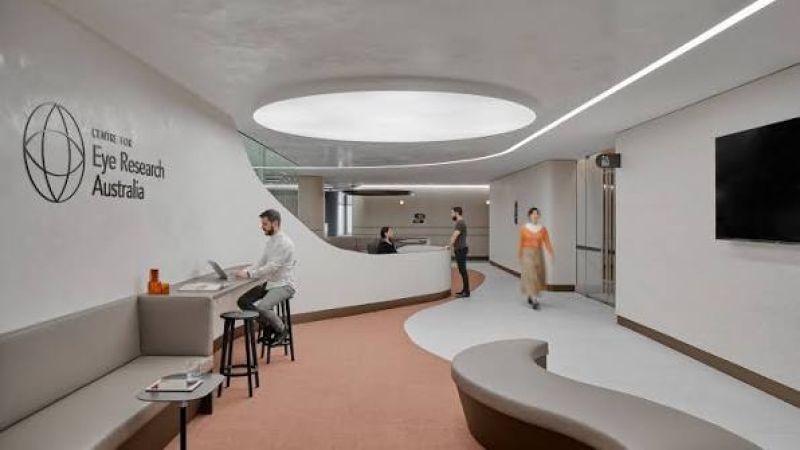
What companies are saying about SCOUT: Eye Research Australia
“We were incredibly impressed with our SCOUT interns. It was inspiring to see their progression over the 12 weeks, from building new knowledge to contributing innovative ideas that helped drive our research forward.
The SCOUT student engagement team also did a fantastic job in selecting talented and motivated interns, which made the program easy and enjoyable to be part of.”
— Dr Ceecee Britten-Jones, BOptom (Hons), PhD
Senior Research Fellow, University of Melbourne and Honorary Research Fellow, Centre for Eye Research Australia
Read how our students have made an impact
FAQs
-
A SCOUT team will typically consist of four masters students, and in some cases, up to five to meet the objectives of a larger project.
-
Curated SCOUT teams represent the faculties of Architecture, Building and Planning, Arts, Business and Economics, Engineering and IT, Medicine Dentistry and Health Sciences (Public Health), and Science.
-
Typically, the supervisor (your internal champion) will commit half a day a week to the SCOUT project (over the 12-week period). This includes attending weekly meetings (on-site with the students) and being available to provide context and guidance, answer questions, remove roadblocks and ensures the project remains aligned to business goals.
-
Every company challenge and SCOUT project is bespoke. Our end-to-end program delivery supports the full lifecycle of your SCOUT project – from design to delivery.
- Project brief design: in collaboration with the company, we workshop to complete a detailed project scope and work output plan.
- Advertise and recruit: the University of Melbourne will advertise within faculties and manage the student application process. We will provide the company with a shortlist of candidates for interview and selection.
- Student 12-week workplan: we will work with the company to provide onboarding workshop materials including student’s draft 12-week workplans that align with the SCOUT project and company goals and expectations. This ensures students are ready to add value from day one!
- Ongoing support and milestones: administrative support occurs during the 12-week internship. This includes tracking of SCOUT program milestones, presentation updates and an end of project report, and/or other outputs as required.
- Evaluate and good news story creation: we will evaluate the success of your SCOUT project through company and student feedback and provide you with a report for future considerations. Lastly, we will create a 'good news story' to promote the project and conclude the program.
- Program fee: the SCOUT program is delivered through a $20,000 (ex GST) service fee per project, providing a structured way to engage with emerging talent while progressing a real business challenge.
- There is also the opportunity to embed a University of Melbourne academic researcher into your project. This is scoped and priced based on your specific objectives and desired outcomes.
-
SCOUT teams are expected to be on-site to support in-person collaboration, relationship building and stakeholder meetings. Other arrangements may be discussed with student during the recruitment process.
-
Market research, technical investigations, public policy, sustainability initiatives, innovation strategy – and much more! We scope the project with you to ensure it is achievable within the specified timeframe and curate a SCOUT team that can achieve the project objectives.
-
Yes they can! Companies have gone on to hire students as part-time or casual employees. In other cases, companies have engaged students in their internal graduate intake programs, or as a PhD student.
-
Students who apply for a SCOUT project do so for course credit and are therefore not eligible to be paid. SCOUT complies with the University of Melbourne’s Vocational Placement Letter of Agreement and Fair Work Act 2009.
-
The host organisation owns the project IP created during the placement. The student keeps copyright over their own assessment and reporting materials for their course. Full terms are in the Vocational Placement Letter of Agreement.
Put your academic knowledge into practice
Gain experience that goes beyond the classroom and build valuable connections.
Join a multidisciplinary team of fellow masters students and tackle a real business challenge over a semester-long internship placement.
12
Week-long placement
4
Masters students in the team
6
Faculties represented
3
Intakes per year
1–3
Days on site each week
Course credit
Counts towards your degree
Benefits of joining SCOUT
- Real industry experience – work on a live project (challenge) for a company
- A multidisciplinary network – collaborate with peers from other faculties and learn new skills
- A foot in the door – companies have hired SCOUT students part-time, casually, into grad programs, or as PhD candidates
- Something to show for it – talk about your industry and collaborative experience in your next interview
- Credit towards your masters – SCOUT counts as course credit; it's part of your degree, not extra-curricular
- Guided and supported – a company champion (supervisor) and a University of Melbourne SCOUT Lead support you from day one to final deliverables.
“A SCOUT internship allows you to apply classroom knowledge to a real project, work with people from different disciplines, and better understand your own strengths and career interests. You also gain a much deeper understanding of how real-world problems are solved.”
Amira Damayanti, Faculty of Business and Economics – SCOUT project with CAS Energy
Read how our students have made an impact
How to get involved
- Apply for a SCOUT project: SCOUT projects are advertised through your faculty ahead of each semester intake. Explore available opportunities and apply for a project that aligns with your academic background, skills and career interests. Shortlisted students will be invited to interview with the host organisation.
- Join your team: successful applicants are matched into a multidisciplinary team of masters students. Together, you’ll bring complementary skills and perspectives to address a real-world industry challenge.
- Deliver impact in the workplace: over 12 weeks, you’ll work alongside your supervisor, industry professionals and your SCOUT teammates to deliver meaningful outcomes for the host organisation. Depending on your faculty internship hourly requirements, you’ll be on-site 1 to 3 days per week, gaining hands-on experience, building professional networks and applying your knowledge in a real-world setting.
Intake dates
| Intake | Advertising period | Recruitment and selection | Student placement |
|---|---|---|---|
| Semester 1 2027 | November–December 2027 | January–February 2027 | 1 March–30 May 2027 |
| Semester 2 2027 | March–April 2027 | May–June 2027 | 26 July–24 October 2027 |
| Summer 2027/28 | July–August 2027 | September–October 2027 | November 2027–February 2028 |
*dates are subject to change based on UoM teaching periods and faculty timeframes
What SCOUT teams can help with
SCOUT teams contribute a broad mix of skills and emerging knowledge resulting in valuable work outputs.
What companies are saying about SCOUT: 4DMedical
“Every week when we have our progress meeting with our SCOUT team, we are blown away by what they present to us. The SCOUTS are not only delivering on our short-term business needs, but also on our long-term drivers of business growth.
The complex problems faced by companies as they seek to commercialise their technologies require rigorous analytical skills, multidisciplinary thinking, nimble minds and team-work, and that’s exactly what you can expect from the SCOUTS. They are fabulous.”
— Tim O’Meara PhD, MBA
Director Government and Research Strategy, 4DMedical
FAQs
-
SCOUT internship placements are advertised through your faculty ahead of each intake. Check your faculty’s usual communication channels for application details, timelines and instructions.
-
SCOUT is open to masters students across Architecture, Building and Planning; Arts, Business and Economics, Engineering and IT, Science, and MDHS (Master of Public Health). Students must be eligible for an internship subject within their course at the time of the project semester intake, so it’s important to check your course requirements with your faculty before applying.
-
No. You undertake SCOUT for course credit rather than payment. SCOUT complies with the University of Melbourne's Vocational Placement Letter of Agreement and the Fair Work Act 2009, as it forms part of your academic program and learning requirements.
-
Typically, four masters students from different faculties are brought together to form a multidisciplinary SCOUT team. This means you'll collaborate with students from a range of academic backgrounds and gain experience working across disciplines, similar to many real-world workplace environments.
-
Depending on the number of placement hours required for your internship subject, you’ll work with your host organisation for approximately 1 to 3 days per week over the 12-week placement.
-
SCOUT teams are expected to be on-site to support in-person collaboration, relationship building and stakeholder meetings. Other arrangements may be discussed with the host organisation during the recruitment process.
-
Your faculty will support your internship subject eligibility and enrolment, while a SCOUT Lead will guide the team throughout the project from commencement to final deliverables. You’ll be mainly supported by a supervisor from the host organisation who meets with the team regularly and provides project-specific guidance.
-
While employment is not guaranteed, some organisations have gone on to hire SCOUT students in part-time or casual roles, graduate programs, or PhD pathways. Participating in SCOUT is a great way to build industry connections and demonstrate your capabilities to potential employers.
-
You retain copyright of any assessment and reporting materials you produce as part of your University coursework. The host organisation owns the intellectual property created for the project during the placement, with full details outlined in the Vocational Placement Letter of Agreement.
-
Get in touch with the SCOUT Project Team by emailing: Angela.Cisternino@unimelb.edu.au