5 Minute read
Life after graduate research: Dr Jesse Zanker
Dr Jesse Zanker helped develop clinical guidelines for the management of sarcopenia – muscle loss in old age – during his PhD. Since graduating, his clinical work continues to generate interesting research questions, while his research skills feed into clinical decision-making.
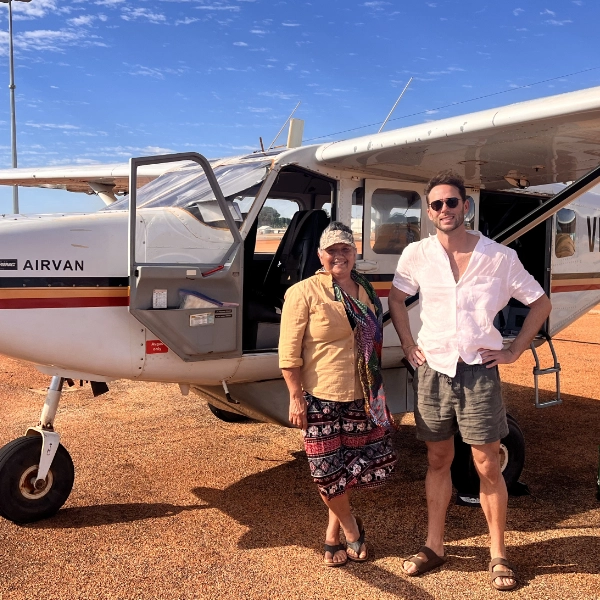
“I think a PhD gives you more tools to address problems. And there are a lot of problems in the world,” says University of Melbourne PhD graduate Dr Jesse Zanker.
Dr Zanker is a practising geriatrician and has a PhD from the University of Melbourne's Faculty of Medicine, Dentistry and Health Sciences. His PhD aimed to improve how we manage muscle loss in old age.
“If you ask older people – or even people of any age – what they fear most about the future, many people will say it's losing independence,” he says.
“My ultimate goal in both clinical practice and in research is to give people the best support to have the best life possible for as long as possible.”
Sarcopenia is the loss of muscle mass and function when we get older. It can limit daily activities, which can accelerate the muscle loss and lead to a cycle of progressive decline.
People with sarcopenia might experience weakness, fatigue and an increased risk of falls and fractures. But they may also experience depression and loneliness as a result of their reduced independence.
“Sarcopenia is a relatively new field, and so there are still many unknowns and a lack of consensus around how we define it. And how do we approach treatment, if we don't know how to define it?”
Giving people with sarcopenia a say in its management
Dr Zanker’s PhD looked at patterns in sarcopenia in Australia through data as well as the epidemiology of muscle biology.
“How do muscles work? And when they're not working, does that predict bad things like falls or even death?” he says.
Dr Zanker also wanted to give people living with the condition and their carers a say in how the condition was being managed.
“We did what's called a Delphi study, where you aim to explore disagreements between people, but also achieve a consensus on the way a condition might be managed, and how you diagnose it,” he says.
Based on this study, Dr Zanker co-developed clinical practice guidelines for sarcopenia.
“Unfortunately, our guidelines are a little outdated because since we published them, new evidence has come to light. But that's the nature of science. That's the nature of progress,” he says.
“But that has led to me being part of the group to establish the global definition of sarcopenia. They adopted the blueprint of our Delphi study to undertake the global Delphi study.”
Learn how to work with people effectively through a PhD
The nature of his research meant that Dr Zanker worked with many collaborators throughout his PhD.
“I had around 150 co-authors on my seven papers. It was a challenge come submission time, because I had to get a lot of signatures,” he laughs.
Working with a lot of people definitely creates more challenges and takes more time. You have more consultation. You have more disagreement. But disagreement in science is really important. It's healthy. It's how we progress. Dr Jesse Zanker
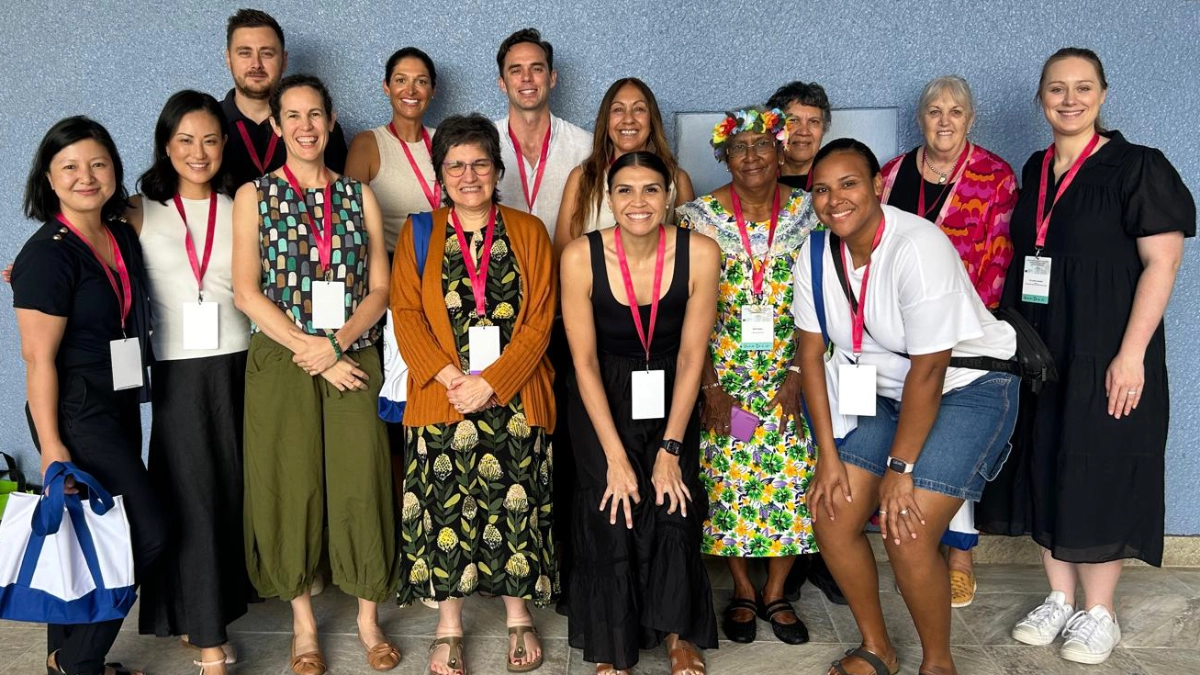
Broader networks also create more opportunities for learning – for understanding different perspectives and contexts, particularly in globally relevant work.
Dr Zanker learned how to work effectively with other people in the process.
“I learned so much about managing disagreements, managing up hierarchically and also managing myself within that.”
What questions to ask when deciding to complete a PhD
When his future supervisor asked if Dr Zanker wanted to do a PhD, he was hesitant.
I really wanted to weigh up whether it was the right decision for me. But I'm now grateful that I made that decision. Dr Jesse Zanker
Dr Zanker’s concern was competing priorities between working as a doctor in regional Victoria – as part of the conditions of a scholarship he’d received when beginning his medical training – while completing his PhD.
“I think everyone starting a PhD will have those competing priorities,” he says.
“Do you make a temporary sacrifice for an income cut while doing your PhD for the pursuit of your interests and possible potential for more employability later on?”
A PhD scholarship can help finance a graduate research degree. Dr Zanker received a research training program scholarship to support his PhD.
“It was great. It paid the rent and made things a bit easier for me. Though obviously I was working as a clinician which helped with my wage,” he says.
Dr Zanker encourages prospective graduate researchers to seek clarity early on what the expectations of their supervisor and institution are.
“Having a supervisory team that you trust, and you can raise concerns with, is critical to getting you across the line,” he says.
When determining whether a PhD is for you, talking to people who have completed a PhD – as well as to people who have had more challenging experiences – can help.
“It's really important to hear both perspectives to understand how you can respond to challenges that will inevitably arise in your PhD,” Dr Zanker says.

If it was easy, everyone would do it. It is a challenge, but it's a satisfying challenge, particularly when you finally hit submit. Dr Jesse Zanker
How clinical work and research can intersect for doctors
A PhD can be beneficial even to doctors like Dr Zanker who do a lot of clinical work.
“Making clinical decisions requires drawing on bodies of evidence and the ability to synthesise a range of different data to produce a decision. That also requires communication with the patient and family to ensure what you're recommending meets their values and preferences,” Dr Zanker says.
The research skills taught by a PhD are valuable in this process. But clinical work also feeds into Dr Zanker’s research.
“It generates curiosity about research ideas, because there are so many unanswered questions that arise when we come across the variety of different clinical situations in day-to-day work.”
Today, Dr Zanker works mostly as a clinician. He works for the Royal Melbourne Hospital in geriatric evaluation and management as well as acute geriatric medicine. He also works as a geriatrician in Gisborne through Aria Health and at Aboriginal Community Elders Services.
But Dr Zanker is also involved in research with the On Track Centre of Research Excellence team on multimorbidity in dementia – how patterns of conditions and disease impact people’s quality of life and function, and how that interacts with dementia.
“We’re being guided by elders in terms of taking strengths-based approaches as solutions.”
Dr Zanker has received an NHMRC Investigator grant for emerging leadership, which will fund his research for five years.
Learn more about a PhD in Medicine, Dentistry and Health Sciences
First published on 13 August 2025.
Share this article
Keep reading
-
Why research with us
Explore the benefits of undertaking your graduate research at the University of Melbourne.
-
Your research options
Explore your options as a graduate researcher at the University of Melbourne.
-
Your study experience
Discover what it's like to be a graduate researcher. Find out about University life, support services, and opportunities for skills development.
-
How to apply
Find out how to apply for graduate research at the University of Melbourne.