4 Minute read
Life after graduate research: Dr Xin Li
Infections are a rare but serious complication of medical implants. Dr Xin Li developed an antimicrobial coating for orthopaedic medical implants during her PhD in biomedical engineering. As an international graduate researcher, she chose the University of Melbourne for its rankings and reputation of multiculturalism.
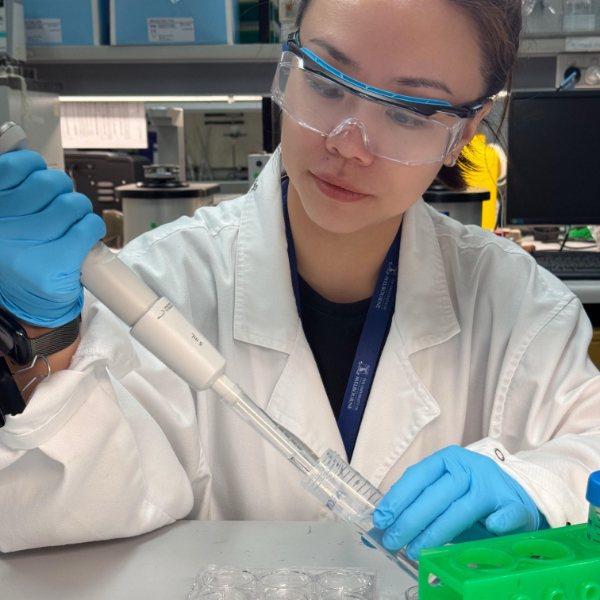
Antimicrobial resistance kills more than a million people worldwide each year.
Antibiotics are becoming less effective. We need more alternatives to prevent and treat infections.
“Infection itself is a problem that we face every day. I thought if I could develop something that can fight infections, that would be really handy for a lot of people,” says University of Melbourne graduate Dr Xin Li.
During her PhD in biomedical engineering, Dr Li developed antimicrobial selenium nanoparticle coatings for orthopaedic medical implants – medical implants for bones and joints.
Antimicrobial coatings could reduce infections from medical implants
“Materials-associated infections are a very complex complication – that could be severe – that is associated with the use of implants. We wanted to see if we can reduce the risk of those kinds of infections,” she says.
“Selenium nanoparticles are tiny, tiny spheres that we hope can effectively damage or kill the bacteria to fight the infections in humans.”
Selenium is also an essential nutrient for human beings.
“We hope that there is an administration window that can be damaging to bacteria, but not that toxic to human beings,” Dr Li says.
Dr Li’s PhD research was part of the Australian Research Council Training Centre for Medical Implant Technologies. The centre brings together researchers from the University of Melbourne, Flinders University, Griffith University and Epworth HealthCare. It links them with medical implant global supply chain providers.
We had industry partners involved with each project. Graduate researchers also had the chance to meet everyone as part of the annual symposium. Dr Xin Li
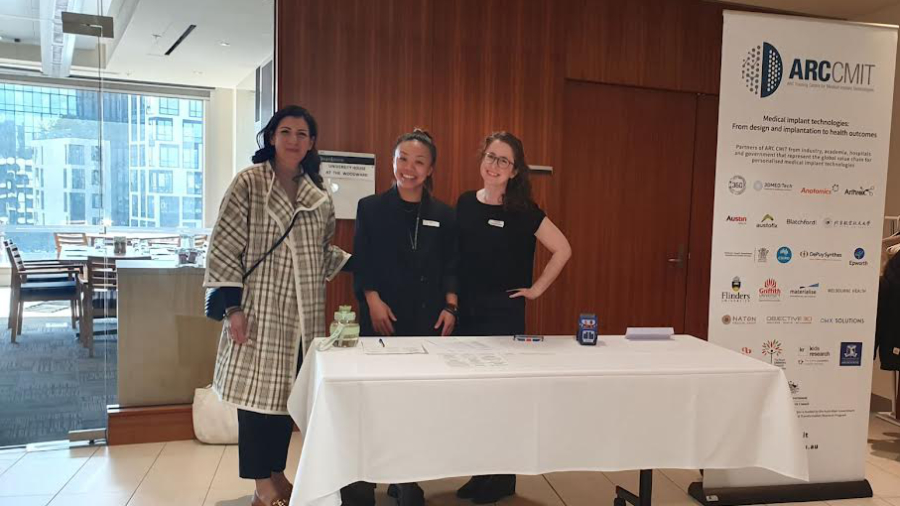
Workshops coordinated by the training centre help introduce graduate researchers to topics important to industry, like Good Manufacturing Practices.
Dr Li’s research also benefited from facilities in the Melbourne Biomedical Precinct. The precinct has more than 40 research, education and industry partners. It has been delivering medical care, research and education in Victoria for more than 160 years.
Selenium nanoparticles were indeed effective at fighting microbes, Dr Li’s research found. But the research group still needs to optimise the coatings before they can be applied to patients.
Learn more about our graduate research options
Industry partnerships give new research perspectives
Dr Li worked on the selenium nanoparticle coating project with an industry partner: Melbourne-based medical device company Anatomics.
“I had the chance to see the manufacturing process of the medical implants,” Dr Li says.
The experience helped Dr Li think about her research differently. In biomedical research laboratories, researchers may use a lot of chemicals. That is often not ideal for a commercial manufacturing process.
“It helped me think about how can I better design the material? How do I make it safer and more efficient?” she says.
The University of Melbourne welcomes international graduate researchers
Dr Li came to Australia from China for a Master of Biomedical Engineering at the University of Melbourne.
“I was lucky that I got the offer from the University of Melbourne. I got offers from other universities as well, but the University of Melbourne is one of the leading universities in Australia and in the world,” she says.
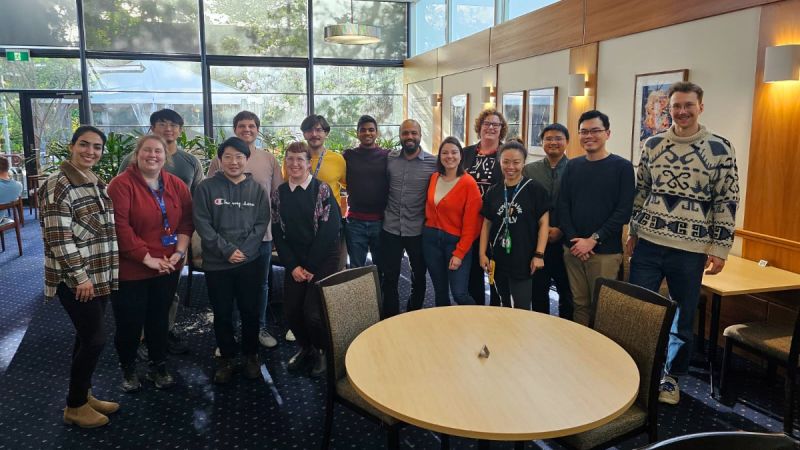
The University of Melbourne gives us a multidisciplinary and multicultural environment. I feel I was respected here. Dr Xin Li
After she completed the masters, Dr Li felt like she could still do more to help people. She decided to stay for a PhD with Professor Andrea O’Connor.
She received a Melbourne Research Scholarship to support her PhD research. The scholarship includes fee remission and a living stipend for graduate researchers.
A PhD can build community
Though part of her PhD took place at the height of the COVID-19 pandemic, Dr Li still felt connected to the university community.
“We had no access to anywhere. We were away from our families. But then our supervisors and team members were there to help. We became kind of families together and helped each other,” Dr Li says.
“At the University of Melbourne, we also have the access to the psychological counselling sessions, which is really great, because sometimes we do need to use them.”
Dr Li’s research group remained friendly after COVID-19 lockdowns ended.
“Sometimes we have the team gathering together for after-work drinks or lunch or dinner together, which is great,” she says.
What skills do you develop in a PhD?
After finishing her PhD, Dr Li continues her selenium nanoparticle research for Professor O’Connor as a postdoctoral fellow.
“The PhD helped me because I built up my experiment skills, techniques and scientific skills. It helped me learn to manage and design my experiments and time,” she says.
Her ability to communicate her research and other soft skills that she developed during her PhD are also important in her current role, Dr Li says.
“Sometimes the science just does not work. And you don't know why. How can you deal with it? How can you resolve it?” she says.
“Those kind of problem-identifying and resolving skills are beneficial to me now and my future life.”
First published on 26 November 2024.
Share this article
Keep reading
-
Why research with us
Explore the benefits of undertaking your graduate research at the University of Melbourne.
-
Your research options
Explore your options as a graduate researcher at the University of Melbourne.
-
Your study experience
Discover what it's like to be a graduate researcher. Find out about University life, support services, and opportunities for skills development.
-
How to apply
Find out how to apply for graduate research at the University of Melbourne.