5 Minute read
Life as a graduate researcher: Cida Ghosn
Our workplaces affect our health and wellbeing. PhD candidate Cida Ghosn is evaluating the WELL building standard on three levels: environmental, social and governance alignment, stakeholder value perception and employee perception. Following a career as an architect in Brazil, she is developing new skills and networks through her PhD.
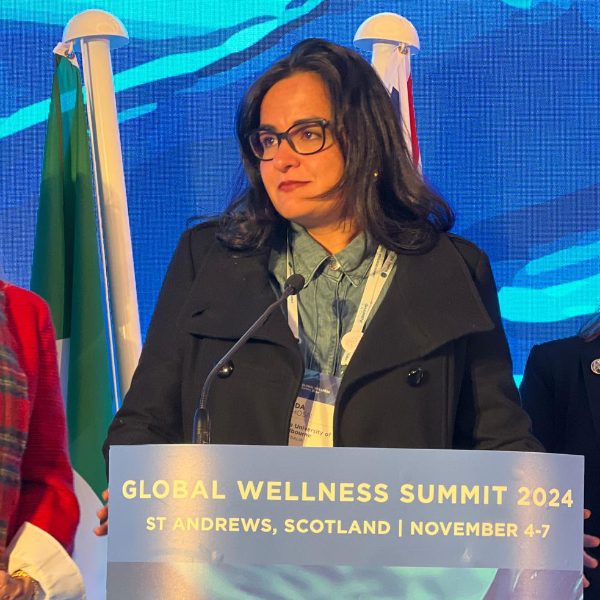
“Whether working from the office or home, we spend a significant portion of our time at work,” says University of Melbourne PhD candidate Cida Ghosn.
And the places where we work can affect our health and wellbeing. The WELL Building Standard rates workplaces on their approach to air and water quality, ergonomics, ventilation, light quality and movement, among other measures. It also includes organisational policies around fitness and mental health.
"The idea is that by following the appropriate design strategies, policies and organisational approaches, the organisation will be providing a healthy workspace where people can thrive," Cida says.
But is this building standard really working as intended?
Is the WELL building standard worthwhile for organisations?
“My main goal is to understand what the main returns for organisation are when they implement WELL,” Cida says.
That could include financial returns, but also healthier workforces or increased productivity.
Cida is completing a PhD in Architecture, Building and Planning. Her research takes place in three stages:
- Understading the alignment of rating tools like WELL with Environmental, social and governance (ESG) reporting requirements
- Interviewing decision-makers within organisations about their motivations for implementing WELL and their returns on implementing it, and consultants about their experiences implementing WELL
- Analysing Glassdoor job reviews about what health and wellbeing means for employees.
Cida will then see if the three levels of expectations around WELL are aligned. She hopes her research will help organisations implement health and wellbeing strategies more effectively.
"With 18 years of experience as an architect in Brazil, and having run my own business, I understood the importance of staying connected with industry partners and institutions," Cida says.
As a committee member of CoreNet Australia, Cida maintains her industry connections. It helps her bridge the gap between academia and practice.
"There is a valuable exchange of knowledge and experience. Industry professionals engage with my research, and I seek their insights while contributing academic research findings," she says.
The Sustainable and Healthy Environments Lab, led by Cida’s PhD supervisor Professor Christhina Candido, also helps build her networks.
Learn more about our graduate research options
What is the University of Melbourne PhD experience like?
Cida chose to do a PhD to get a taste of academic research. After a masters exchange in Australia, she wanted to continue her academic experience by pursuing a PhD. She now holds a Research Training Scholarship.
Cida has enjoyed the experience so far.
I really enjoy doing research, reading, collecting data, analysing it, getting to new findings, discussing research and critical thinking.Cida Ghosn
Getting to travel overseas has been another benefit. Cida has received travel funding from the University to share her research at international conferences. She also visited the University of Cambridge to discuss research collaboration with other academics.
“The University of Melbourne offers extensive support through a wide range of resources,” Cida says.
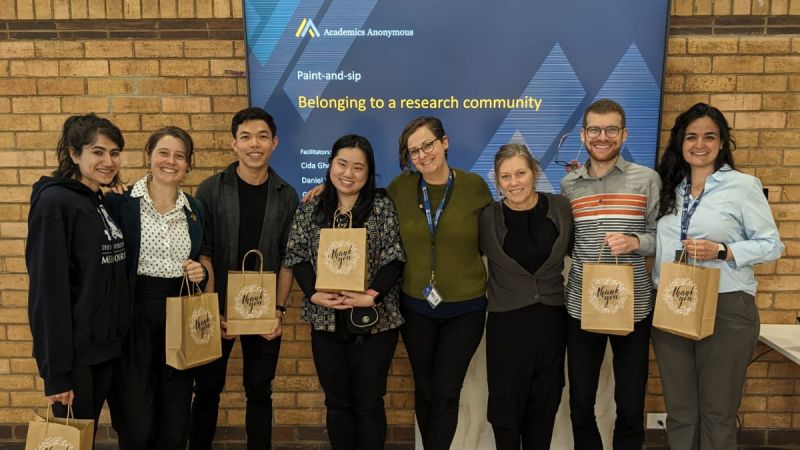
Additionally, with a group of other graduate researchers, Cida applied for a grant from the Graduate Student Association. They formed a group called Academics Anonymous.
Many events for graduate researchers invite senior academics to present or attend. Cida and her colleagues wanted Academics Anonymous to have events only for graduate researchers.
“The PhD is a sole journey. You don't usually work as a team. So the main idea was to foster a feeling of belonging and togetherness,” Cida says.
The group had technical discussions about literature reviews and writing techniques – but also topics like the supervisor-graduate researcher relationship.
I've made connections with people from all over the world and built my friendship connections here at the University. Cida Ghosn
Cida’s supervisors are also a source of support for her.
"I work closely with my supervisory team and colleagues to ensure my research remains focused, relevant and rigorous. My supervisors have been supportive in guiding me through complex aspects of my research, and I appreciate the diverse perspectives they bring,” she says.
Cida has actively sought out opportunities beyond her research.
“I've had the opportunity to take on research assistantships and teaching roles. Balancing finances and research as a PhD candidate can be challenging, but I’ve been able to manage through careful planning and additional work opportunities,” Cida says.
What are the benefits of a PhD?
For Cida, the PhD opens doors to an academic career – but it will also be useful for a future career in industry.
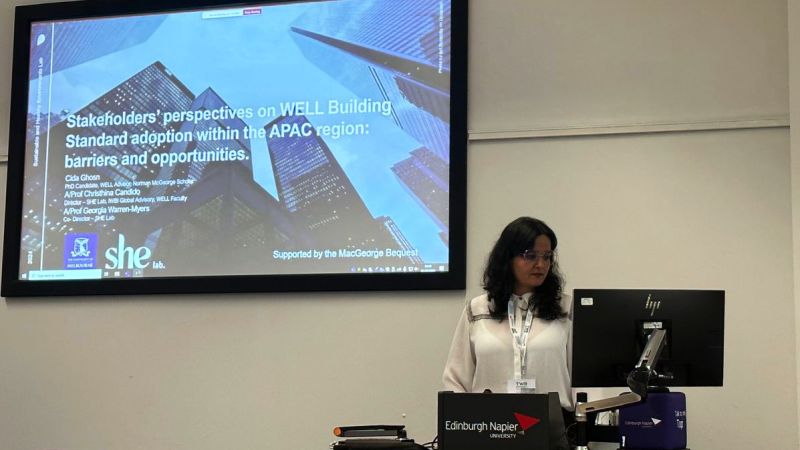
A PhD gives you the skills for analysing complex problems, to work independently and the ability to get the thing done. Cida Ghosn
“Through conducting a lot of interviews, I'm learning a lot about communication: how to ask questions, what to focus on, and how to truly listen," she says.
Discipline is important for keeping herself focused through the process. One strategy Cida has found to help break down a PhD into manageable chunks is to include publications in her thesis.
“Sometimes you get lost along your PhD. Having small goals helps to say, ‘Okay, this is goal one, let's get the goal done, and then we move to the goal two’,” Cida says.
“And publications are a big thing in your CV if you want to follow an academic career.”
Cida hasn’t decided where her career will go after graduating. But she feels the PhD will create opportunities for her.
“I would like to continue doing research, and I am also open to applying research in the industry. So regardless of the path that I choose to have in the future, the PhD will support me with that.”
Learn more about a PhD in Architecture, Building and Planning
First published on 14 January 2025.
Share this article
Keep reading
-
Why research with us
Explore the benefits of undertaking your graduate research at the University of Melbourne.
-
Your research options
Explore your options as a graduate researcher at the University of Melbourne.
-
Your study experience
Discover what it's like to be a graduate researcher. Find out about University life, support services, and opportunities for skills development.
-
How to apply
Find out how to apply for graduate research at the University of Melbourne.