3 Minute read
Professor Peter Lee researches how the human body produces and responds to mechanical forces.
Professor Lee leads the biomechanics and medical implants research theme in the University of Melbourne MedTech platform. The researchers use advanced imaging, computational modelling and virtual prototyping systems to develop personalised medical devices.
Unlike buildings and structures, the body responds to mechanical force by using a feedback loop. When you apply forces to the body and exceed a certain threshold, it can lead to injury. To avoid this, you need to prevent the body from reaching that threshold. However, if you don't put any load on your bone or use your muscle, they will begin to weaken and deteriorate.
We need mobility to maintain quality of life and healthy ageing. But in healthcare, we can’t currently perform accurate long-term mobility assessments of a person in their home. My team is developing a user-friendly digital twin that can predict and visualise real-time human joint motion and mobility in any location. It combines wearable sensors, 3D mapping and artificial intelligence. Apart from improving healthcare for older Australians, this digital twin framework will benefit telemedicine and remote rehabilitation for isolated communities.
In biomechanics, we’re asking many of the same questions the MedTech industry is asking. For example, more young people are needing hip and knee replacements because injuries are causing arthritis earlier in life. Unlike prostheses designed for older people, the industry wants to know how to create devices that can last over 30 years. To achieve this, we need to understand the forces in the body of active young people, as well as what implant materials we can use to make sure these prostheses won't fail.
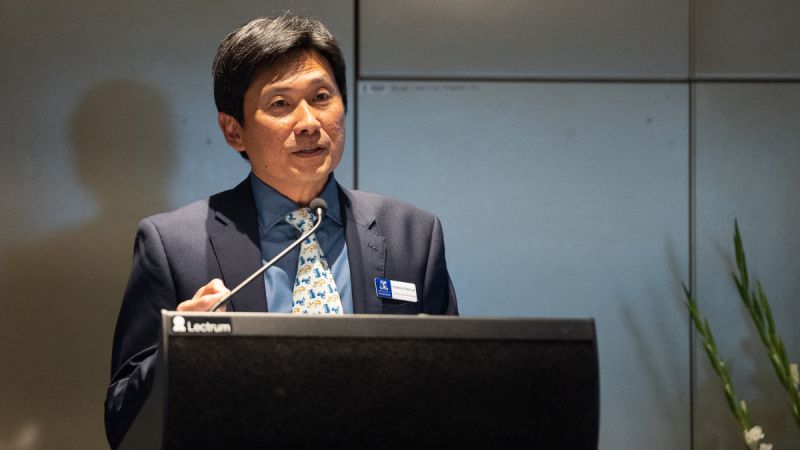
Once you start to break industry problems down, you get all those fundamental questions that we've been asking. The gap between applied and fundamental research is narrower than we think. Professor Peter Lee
In the ARC Training Centre for Medical Implant Technologies, we've been focusing on personalised 3D-printed medical implants. The centre is training about 15 PhD researchers. And we have almost 20 partners, all from different industries interested in personalised devices.
We have this 4-M paradigm for our research work with industry partners: Measure, Model, Manufacture and Manage. First, we measure all the forces in the body relevant to the medical device. Then we build a model of the body for virtual prototyping the device. We can virtually implant the device and test it using the model. After the virtual design is vigorously tested and validated, it can be manufactured using 3D printing. We then work closely with the clinical team of surgeons and rehabilitation specialists to help manage the patient to recovery.
The 4-M enabled us to develop a fail-safe device with Signature Orthopaedics for people with lower limb amputation. It’s based on the osseointegration process common in dentistry. Instead of fitting a prosthetic socket to the residual limb, you insert an implant into the bone and connect the rest of the artificial limb components to the implant.
Patients with this osseointegrated artificial limb have said to me that they actually feel that the artificial leg is part of them now, because it's directly connected to the body. Professor Peter Lee
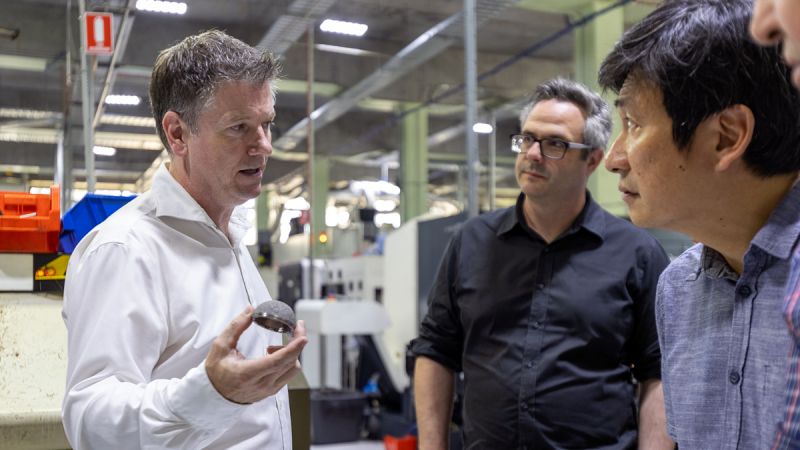
The challenge is that if the patients take a fall, all the load will be transferred to the bone, and you can fracture the bone. We need to fit a fail-safe component between the implant and the artificial limb. This component will protect the bone from unsafe loads. But the inability to distinguish between safe and unsafe loading conditions has inhibited the good design of fail-safe devices. We’re bringing our basic understanding of bone material properties and its loading threshold to prevent fractures. Together with the knowledge and experience of surgeons and Signature Orthopaedics engineers, we’re designing a product that will be safer for patients.
First published on 3 October 2024.
Share this article
Keep reading
-
Explore more MedTech research
Creating transformative solutions for patient treatment and recovery. We bring together expertise from engineering, technology, medicine and science to develop tools to improve community health and individual patient outcomes.
-
Partnerships
Find out how we can help to grow your organisation - from talent, to projects and partnerships.
-
Made in Australia: How we’ll grow the local MedTech sector
The MedTech sector needs technical, regulatory and business skills. Our expert panel discussed what Australia’s skill gaps are and how to fill them.
-
Using the human as a sensor for better health
A recent University of Melbourne panel considered the management of information generated from wearable technology and its interpretation for improving health.