Over the past decade, five University of Melbourne-affiliated startups have led the way in advancing world-first, truly revolutionary technologies for the diagnosis, management, and treatment of a range of neurological conditions.
Rather than relying on open-skull surgery, they're developing minimally invasive implants to monitor and decode neural signals or restore brain function. Together, they are redefining our approach to neurological disorders, giving millions of people living with conditions such as paralysis, epilepsy, speech impairment, and Alzheimer's new hope for independence and improved quality of life.
Pioneering the endovascular approach: Synchron and Ultra Bionics
Founded in 2012 by Professor Nicholas Opie, Professor Thomas Oxley and Dr Rahul Sharma, Synchron began with a key insight: instead of drilling through the skull, why not use the body's existing highway – blood vessels – to reach the brain? The Stentrode, a stent-like device inserted through the jugular vein, records neural signals and allows people with severe paralysis to control computers and smartphones with their thoughts.
By November 2025, Synchron had raised US$345 million globally, with backing from top tier venture investors along with Australia’s National Reconstruction Fund Corporation (NRFC). The company was the first to integrate its brain-computer interface (BCI) with Apple's ecosystem, allowing users to control devices such as iPads or iPhones with their thoughts.
It's also collaborating with Nvidia, Amazon, and OpenAI to harness artificial intelligence and machine learning capabilities. The team has placed the Stentrode device in 10 patients across clinical trials in Australia and the US, establishing the safety profile needed to advance toward a larger trial and ultimately broader clinical adoption.
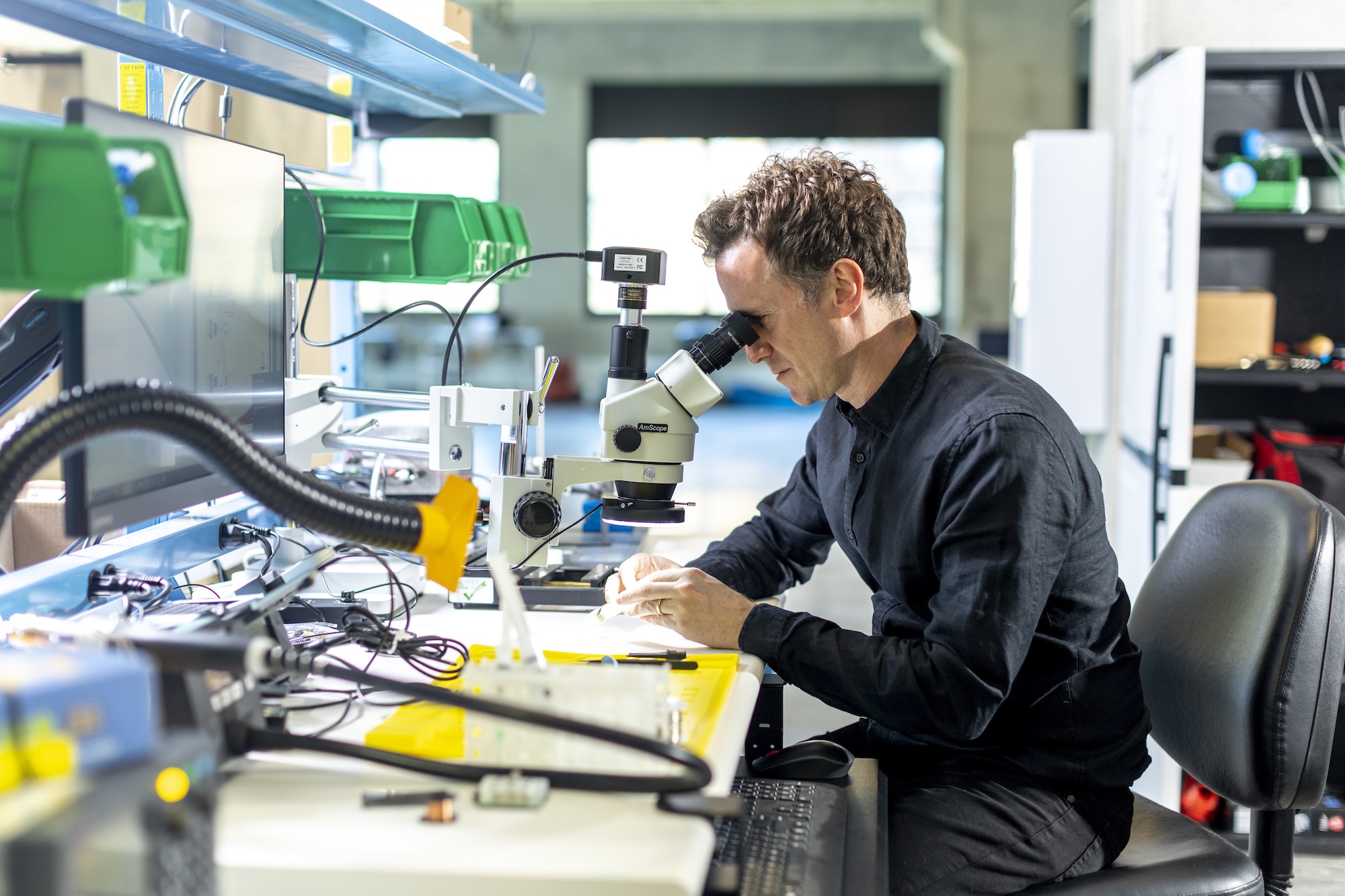
Synchron's success created something incredibly valuable: a blueprint and a talent pipeline for the next generation of Melbourne braintech entrepreneurs. Professor Opie has since founded Ultra Bionics, which is taking neurotechnology in a new direction. Rather than recording brain signals, the company is developing ultrasound technology to stimulate the brain and alleviate symptoms of conditions like Parkinson's, epilepsy, PTSD, and addiction. The approach promises to be safer and more precise than conventional deep-brain stimulation, which requires invasive surgery and can cause irreversible damage to brain tissue. Founded in August 2024, Ultra Bionics has since secured $1.75 million in seed funding, including support from the University’s Genesis Pre-Seed Fund, and is now in discussions with Series A investors.
Detecting and monitoring seizures: Epiminder
Meanwhile, Epiminder – founded in 2018 by Professor Mark Cook as a research collaboration between the University, the Bionics Institute, St Vincent's Hospital Melbourne and Cochlear – has taken a different technological path.
Inspired by a conversation with Professor Graeme Clark, pioneer of the cochlear implant, Professor Cook adapted the bionic ear technology for epilepsy monitoring. The resulting device, called Minder, sits just beneath the scalp and records brain activity continuously to detect and eventually predict epileptic seizures.
Clinical trials have shown that Minder can identify clinically relevant findings in 88 per cent of patients with drug-resistant epilepsy, with the system achieving a world record five-year continuous EEG recording. The company has raised over $150 million to date. In December 2025, Epiminder achieved a major milestone by listing on the Australian Securities Exchange with a market capitalisation of $325 million. The Minder system received approval from the Food and Drug Administration (FDA) in April 2025 and is launching its commercialisation plan for the US in 2026.
Emerging innovators: Fluent and Neurogen
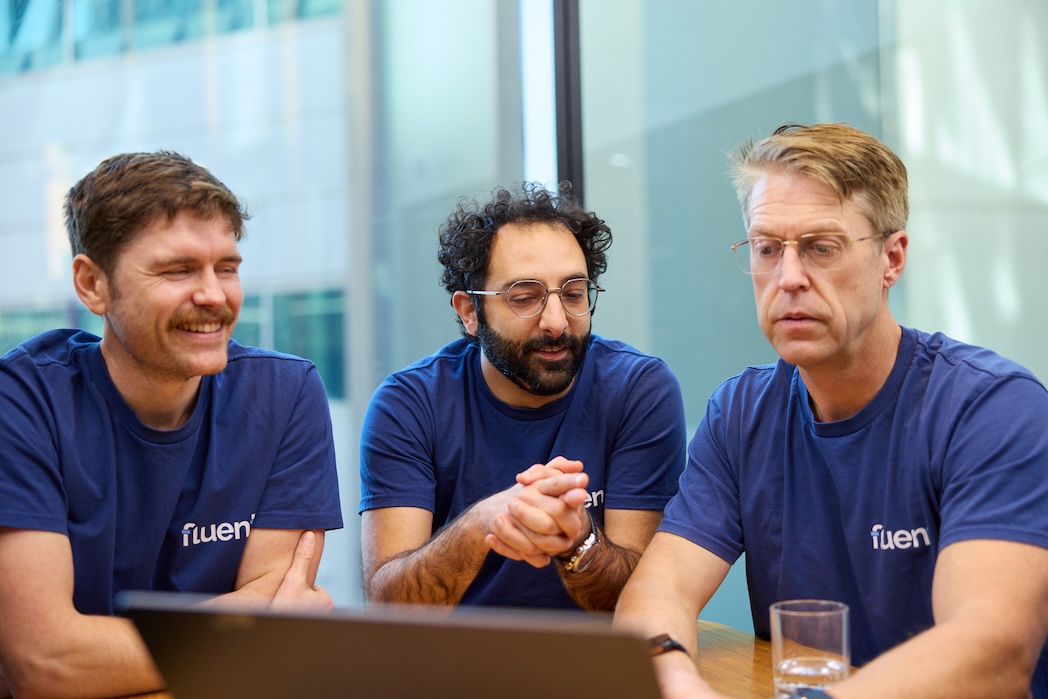
Emerging more recently from the Melbourne Entrepreneurial Centre's TRAM Air programme, Fluent is a promising new startup developing a minimally invasive brain-computer interface that translates thought into text.
The company's initial focus is on people with communication impairments, paralysis, or neurological conditions that make speaking difficult or impossible. Co-founders Dr Dean Freestone and Dr Tim Mahoney assembled a team from the University's biomedical engineering department and brought on industry-leading mentors – including Synchron CEO Thomas Oxley – to guide their development. The company has already filed provisional patents, secured Proof-of-Concept funding from the University, and completed feasibility studies in animals, with human clinical trials planned for the next 12 to 24 months.
Rounding out the cohort is Neurogen, an early-stage biotech startup developing cell-based brain implants to treat conditions such as Alzheimer's, Parkinson's, and traumatic brain injuries. Founded by Dr Ruwini Cooray – a 2025 MedTech Actuator Accelerator graduate – Neurogen is taking a regenerative approach: the company's microtissue implants, derived from stem cells and arranged to resemble native brain tissue, aim to repair and restore lost brain function rather than simply manage symptoms. Professor Opie serves as an adviser, and the company is collaborating with the University of Melbourne, the Florey Institute, and St Vincent's Hospital Melbourne on large animal validation – a crucial step towards first-in-human trials.
This cluster of world-leading neurotechnology companies, all borne out of the University's innovation ecosystem within a few kilometres of one another, represents an incredible convergence of talent, resources, and ambition. Together, they are solving different pieces of the same puzzle: how to diagnose, manage, and treat a range of neurological disorders safely, effectively, and accessibly. For the millions of people living with epilepsy, paralysis, Parkinson's, Alzheimer's, and other conditions, this could soon mean the difference between a life constrained by illness and one restored to more independence and possibility.
Milestones & highlights
Synchron
Epiminder
Ultra Bionics
Fluent
Neurogen
First published on 23 June 2026.
Share this article